Travis A. Lee

Making sense of the time and place of cells and regulatory action.

Postdoctoral Research Associate Ecker Lab, Salk Institute La Jolla, California
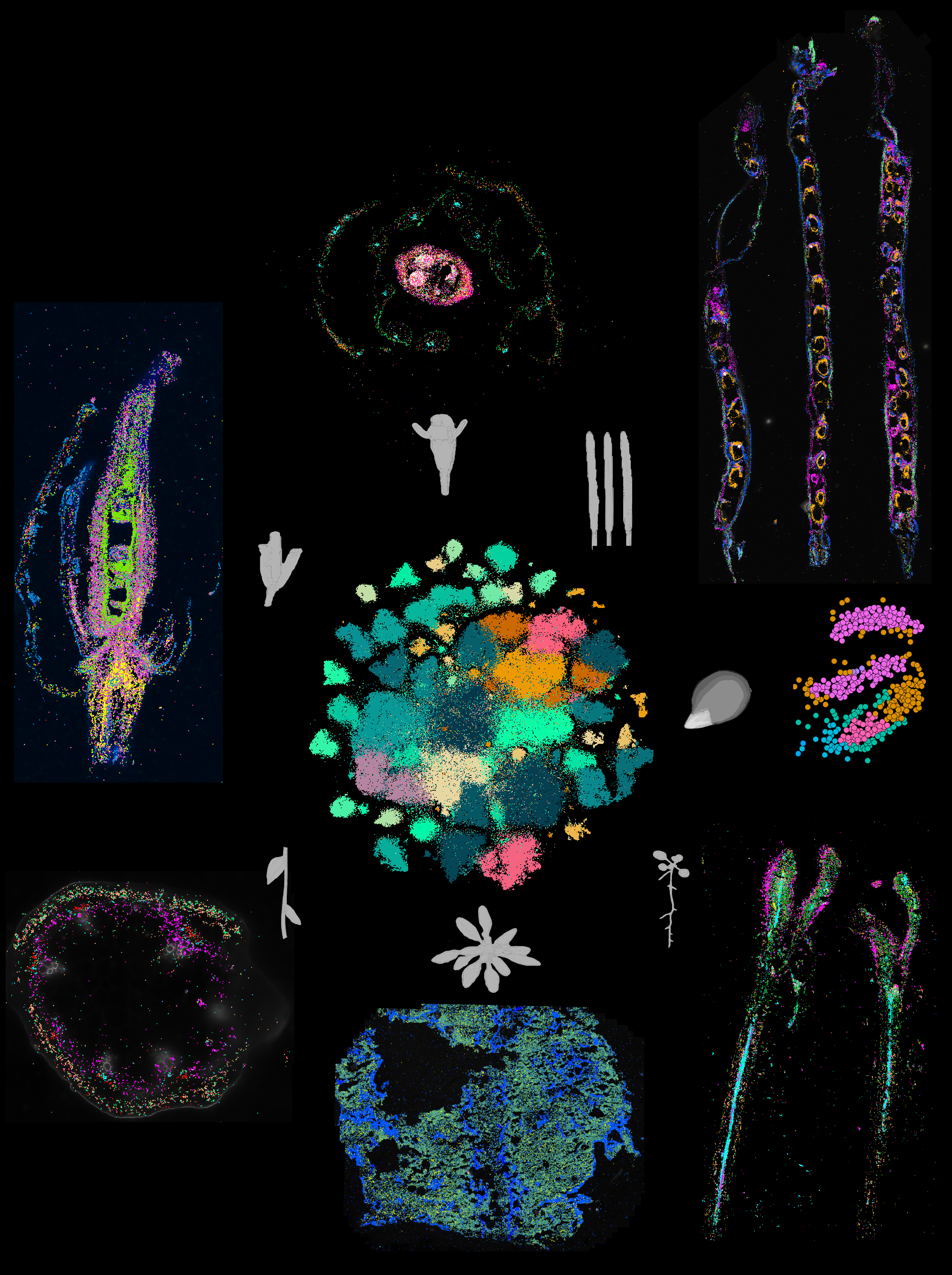
Animated collage of integrated single-cell clusters from the Arabidopsis life cycle atlas
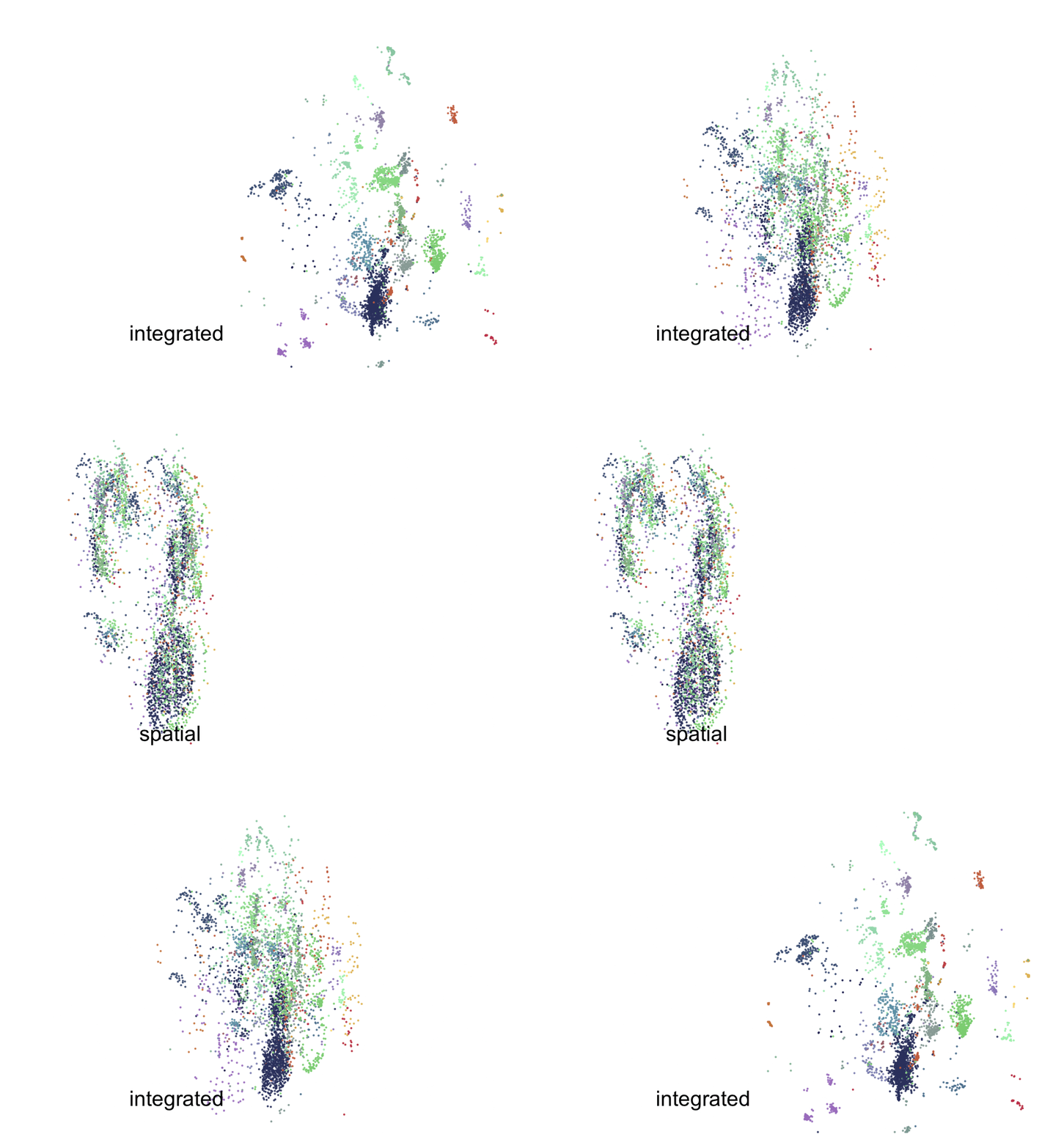
Spatial multi-modal clusters of the Arabidopsis apical hook

PhD, UC Riverside 2018 Salk Institute, Plant Biology Arabidopsis · single-cell · spatial trlee@salk.edu


Peer-reviewed publications{{ counts.papers }}

Invited talks and seminars20

Students mentored11

First-author papers6


Research

A plant is an organized map of cells and states.

The identity of a cell is the sum of inputs, which includes both cell type and cell activity. My research measures the cellular outputs to resolve these states at single-cell and spatial scales to understand how these states inform function.

In the data

Unveiling cellular complexity in plants

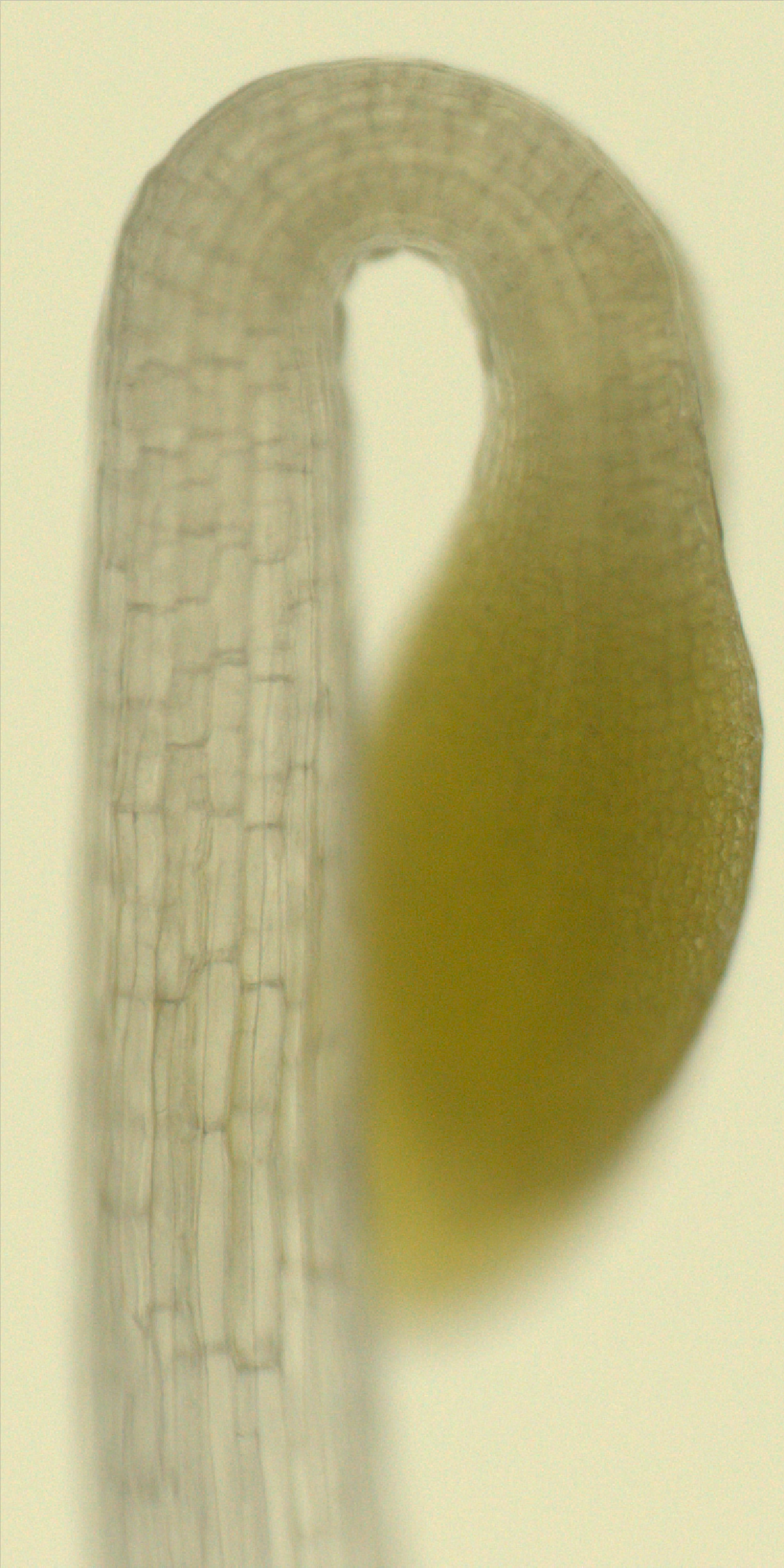
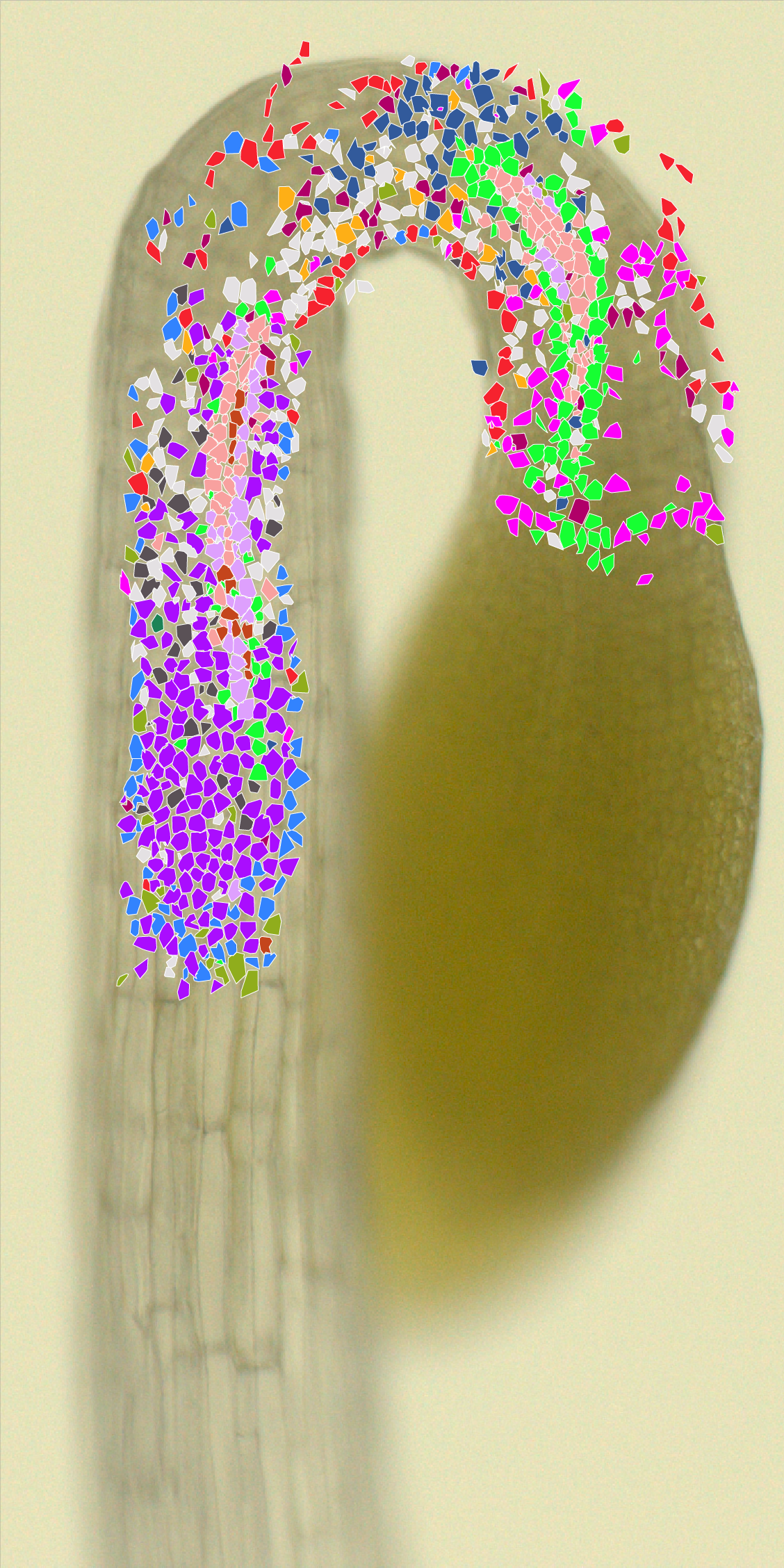
Drag the slider to bring the cell-state annotation over the brightfield seedling. Following the curvature of the hook, distinct states are packed into single-cell files.

Each polygonal represents a segmented cell carrying its assigned state. Read the preprint.

Brightfield Spatial cells
Brightfield micrograph of an Arabidopsis seedling apical hook
The same hook with segmented cells colored by assigned cell state
Arabidopsis apical hook — brightfield and annotated cell states
02

Position, encoded as state

The apical hook lies at the intersection of cell type, development, and hormonal regulation. How do we define individual cells at this tripartite intersection, and what drives cell function in this structure?

The apical hook functions as a standing wave of cells - as cells migrate through this static structure, they are only present at any given position within the apical hook in the timeframe of minutes. Before cells migrate into the arch, they have already embarked along opposing developmental landscapes.

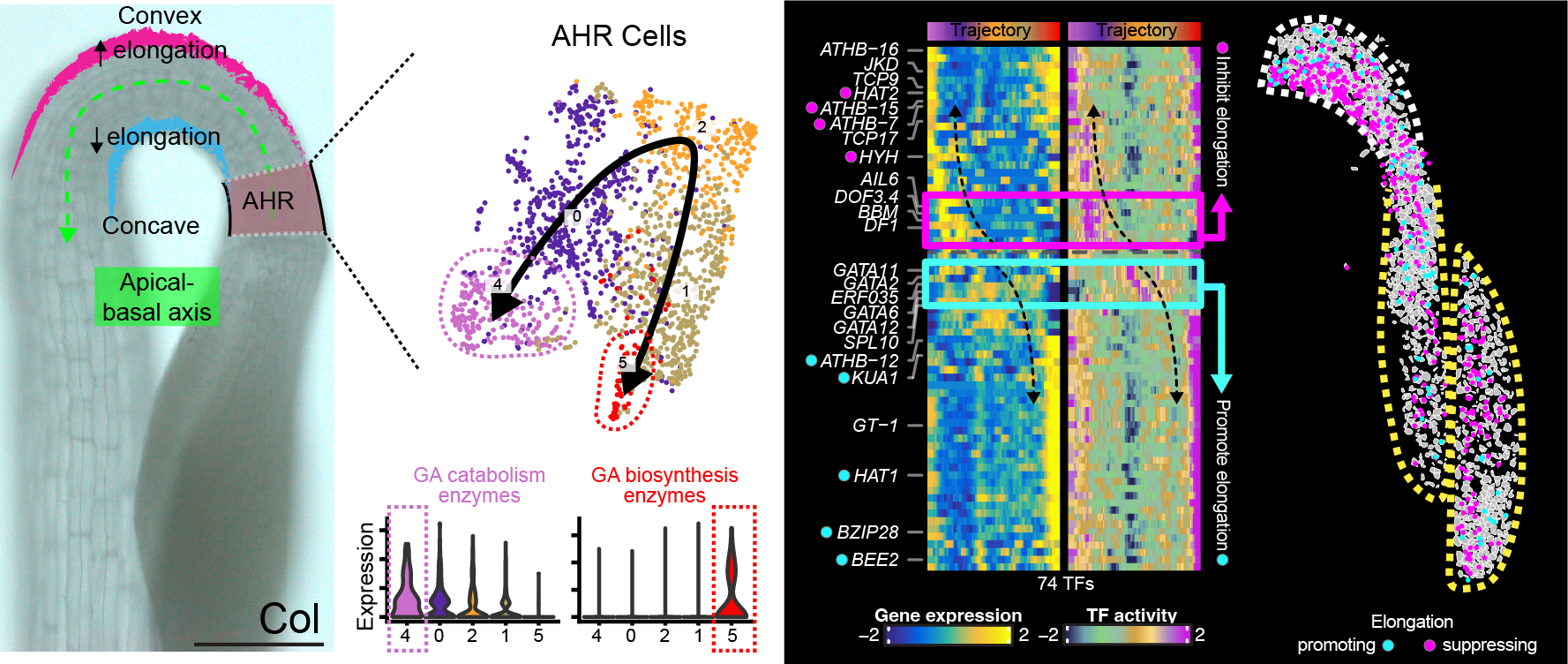
Preprint — transient cell states direct asymmetric growth

Apical hook anatomy with convex and concave elongation zones, the AHR cell trajectory, GA catabolism and biosynthesis expression, and transcription-factor activity mapped back onto the hook
Individual cells embark upon divergent developmental trajectories within the apical hypocotyl region (AHR).
03

Cell states inform stress response

Hypoxia, drought recovery, immune priming: the population average hides the cells that infuence the outcome.

Understanding both when and where stress is regulated, from hypoxia to drought to biotic interaction, can set the physiological outcome of transient stress.

Nature 2025 — PRIMER cells · Nat. Comms 2025 — drought recovery

Systems

From model species, including Arabidopsis, to non-model species, including carnivorous plants

Methods

snRNA-seq, spatial transcriptomics, epigenome and translatome profiling

Open questions

What is the collective identity of a cell and how do we define it?

Publications

{{ pubHeading }}

Full record on Google Scholar and ORCID.


Additional information

trlee (at) salk (dot) edu Google Scholar ORCID

Salk Institute for Biological Studies, Plant Molecular and Cellular Biology Laboratory, 10010 N Torrey Pines Rd, La Jolla, CA 92037.